
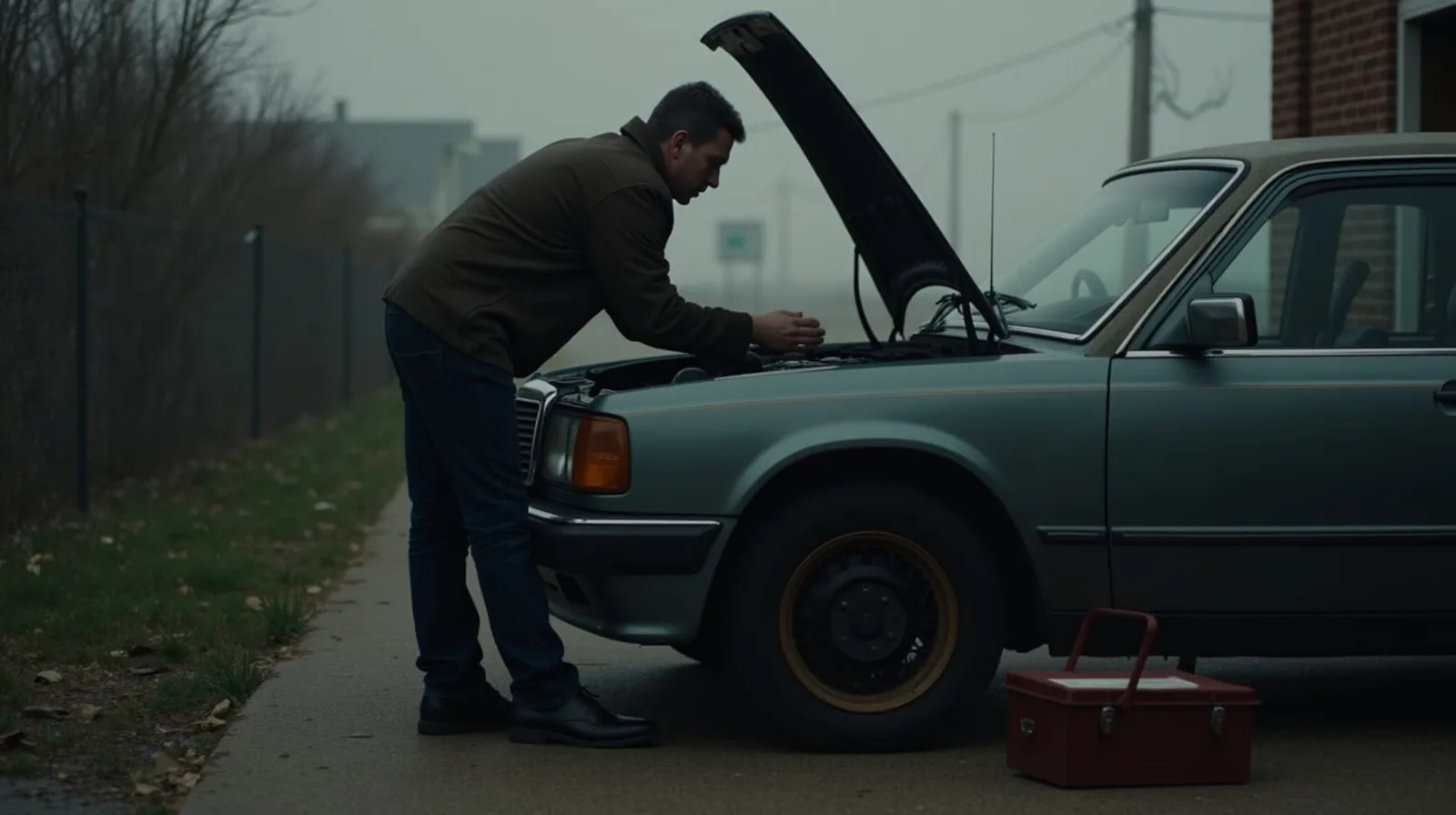
The transmission is making a noise it shouldn't, the shop just quoted you a repair bill that stings, and a small voice in your head says maybe it's time for something newer. That voice is usually reacting to the sting, not doing the math. Before you trade the car in, it's worth actually comparing what staying costs against what leaving costs — because the honest numbers rarely agree with the gut feeling.
Why the repair bill feels bigger than it is
A single repair bill arrives all at once, in one lump, on one bad day. A car payment arrives quietly, in small pieces, spread across years. Our brains weigh those two experiences very differently, even when the payment adds up to far more money over time. This is the "money pit" feeling — the sense that an old car is bleeding you dry — and it's often driven more by the visibility of the cost than the size of it.
That doesn't mean the feeling is wrong to notice. It means it shouldn't be the only input. Write the number down, let the sting fade for a day, and then come back to compare it against the alternative with a clear head.
What keeping the car actually costs
Keeping an aging car means accepting a repair bill every so often, plus the ordinary maintenance any car needs. The repairs get somewhat more frequent as the car ages, and the size of any single bill is genuinely unpredictable — that's the real downside of keeping an older vehicle. But the car itself has already lost most of its value to depreciation. You're not paying to own a depreciating asset anymore; you're paying, occasionally, to keep using one you already own.
- Occasional repair bills, unevenly spaced, sometimes large
- Routine maintenance that scales up slightly with age and mileage
- A rising, but slow-moving, chance of a repair that's genuinely not worth making
- No ongoing monthly payment, and often a lower insurance premium than a newer vehicle
What replacing the car actually costs
A newer car trades unpredictable repair bills for a predictable monthly payment — but that payment is doing more work than it looks like. A meaningful share of a new vehicle's value disappears in the first few years, which means part of every payment is simply covering depreciation you'll never get back. On top of the payment itself, replacing a car typically brings a higher insurance premium, since newer vehicles cost more to repair or replace after a claim. Depending on where you live, there may also be a one-time sales tax on the purchase, plus registration and title fees. None of that shows up on the sticker; it shows up later, spread across the ownership period.
Add it up before you compare
The fair comparison isn't "repair bill versus payment." It's "repair bill versus payment, plus the insurance increase, plus taxes and fees, plus the depreciation you're now paying for." Skip that step and the newer car will always look cheaper than it actually is.
The tipping-point math
Here's a rule of thumb that cuts through a lot of the noise: compare the size of the repair bill in front of you to the cost of a full year of ownership on a replacement — a year of payments, plus the extra insurance, plus a share of any purchase taxes and fees. If the repair is smaller than a year of those combined costs, keeping the car is very likely the cheaper choice, even if it needs another repair or two down the line. Most single repair bills, even the painful ones, are still smaller than twelve months of a new payment and its side costs.
The math shifts if repairs are stacking up close together, or if a shop tells you the next likely failure is a major one — the engine or transmission itself, rather than a belt or a sensor. At that point you're no longer comparing one bill to one year of payments; you're comparing a pattern of bills to that same year, and the pattern can tip the scale.
A big repair bill is a data point, not a verdict. The question isn't whether it hurt — it's whether it was still cheaper than the alternative.
The part the spreadsheet can't answer
Money isn't the only variable, and pretending it is leads to bad decisions too. Reliability has a value that's hard to price: if you're driving a new commute with no backup transportation, ferrying kids on a tight school-run schedule, or simply can't absorb the stress of a car dying at the wrong moment, that's a real cost even if it never shows up as a repair bill. A car that strands you occasionally can be more expensive in missed work or missed obligations than its repair bills suggest.
The reverse is also true. If you have a flexible schedule, a second vehicle as backup, or genuinely don't mind an occasional inconvenience, you can absorb more risk than the spreadsheet gives you credit for — and stretch the old car's useful life further than "textbook" advice would suggest.
Questions to answer before you decide
- Is this repair bill smaller than a year of payments plus the insurance increase plus any purchase taxes and fees?
- Has a mechanic flagged a likely next failure, and is it a minor part or a major one?
- How much does reliability actually matter for your day-to-day life right now?
- Could you cover a surprise repair without financial strain, if one came up next month?
- Are you reacting to one bad day, or to a real pattern over the last year or two?