Nearly everything in a standard car insurance conversation is about the damage you might cause — who you'd pay if you backed into someone or ran a light. It's easy to go years without thinking about the reverse: what happens when someone else is at fault, and they either have no insurance at all or carry so little that their policy runs dry before your bills do. That's the gap uninsured and underinsured motorist coverage exists to fill, and it's one of the most misunderstood lines on a policy declarations page. Here's how it works, what it covers, and how to pick limits without guessing.
The Problem This Coverage Solves
Liability insurance — the legally required backbone of most policies — pays for injuries and damage you cause to other people. It does nothing for your own injuries or your own car when another driver is at fault. Normally that's fine, because the at-fault driver's liability coverage is supposed to pay for yours. The system quietly depends on every driver on the road actually carrying enough of it.
A meaningful share of drivers don't. Some carry no coverage at all, some let a policy lapse without telling anyone, and many more carry only the minimum their state requires — a number set decades ago that can be exhausted by a single trip to the emergency room. When you're hit by one of those drivers, you can be left holding bills that are entirely someone else's fault. Uninsured and underinsured motorist coverage, often shortened to UM/UIM, is the part of your policy that steps in instead.
Uninsured vs. Underinsured: Two Different Gaps
The two names describe two distinct situations, and most policies handle them as a pair:
- Uninsured motorist (UM) applies when the at-fault driver has no liability coverage at all — or can't be identified, as in many hit-and-run situations, which most policies treat as uninsured for this purpose.
- Underinsured motorist (UIM) applies when the at-fault driver has coverage, but their limits are lower than the total of your losses. Their policy pays what it can, and your own UIM coverage is designed to cover some or all of the shortfall, up to your own limits.
The underinsured case is the more common one, and the less intuitive. Nobody in it did anything unusual — the other driver was legally insured. The coverage simply wasn't sized for the crash that happened.
What It Actually Pays For
UM/UIM is usually divided into two parts, and whether you have one, the other, or both depends on your state and your policy:
- Bodily injury coverage pays for your medical treatment and, depending on the policy, related losses such as lost wages and pain and suffering, when an uninsured or underinsured driver is at fault. It typically extends to the passengers in your car as well, and in many policies to you as a pedestrian or a passenger in someone else's vehicle.
- Property damage coverage pays to repair or replace your vehicle when the at-fault driver has no insurance. In some states this is a separate, often smaller, option — in others the job is handled by your collision coverage instead.
It's worth knowing what it doesn't do. UM/UIM pays you, up to the limits you chose, for losses the at-fault driver is legally responsible for. It is not a guarantee that every bill disappears, and it doesn't replace health coverage — it typically works alongside it, and the order in which each one pays depends on the policy and the state.
A Walk-Through: How the Shortfall Gets Covered
Say another driver runs a stop sign and injures you. Your medical bills, time out of work, and other losses add up to a figure well above the other driver's bodily injury limit. Their insurer pays up to that limit and stops. If you carry underinsured motorist coverage, your own insurer can then cover part or all of what remains, up to your UIM limit. Some states compare your losses against the other driver's limit; others stack your UIM on top of it. Which approach applies is a state rule, not a product you choose — and it changes how much a given limit really buys.
In the uninsured case, there's no first layer to go through. Your own UM coverage is the only source of payment besides your health coverage and whatever you might eventually recover from the driver personally, which is rarely much.
Where the Fine Print Bites
- It isn't required everywhere. Some states require UM/UIM, some require insurers to offer it, and some let you reject it in writing. Rejecting it is often a signature on a form — and an easy one to sign without understanding.
- Limits cap the payout. A policy that carries only a minimal UM/UIM limit offers only that much protection in a serious crash, however severe the injuries.
- Stacking rules vary. In some places, coverage on multiple vehicles can be combined; in others it can't. The same policy can be worth very different amounts depending on the rule.
- Property damage limits and deductibles may differ. Fixing your car under UM property damage coverage can involve a separate deductible, or a separate cap, from your regular collision coverage.
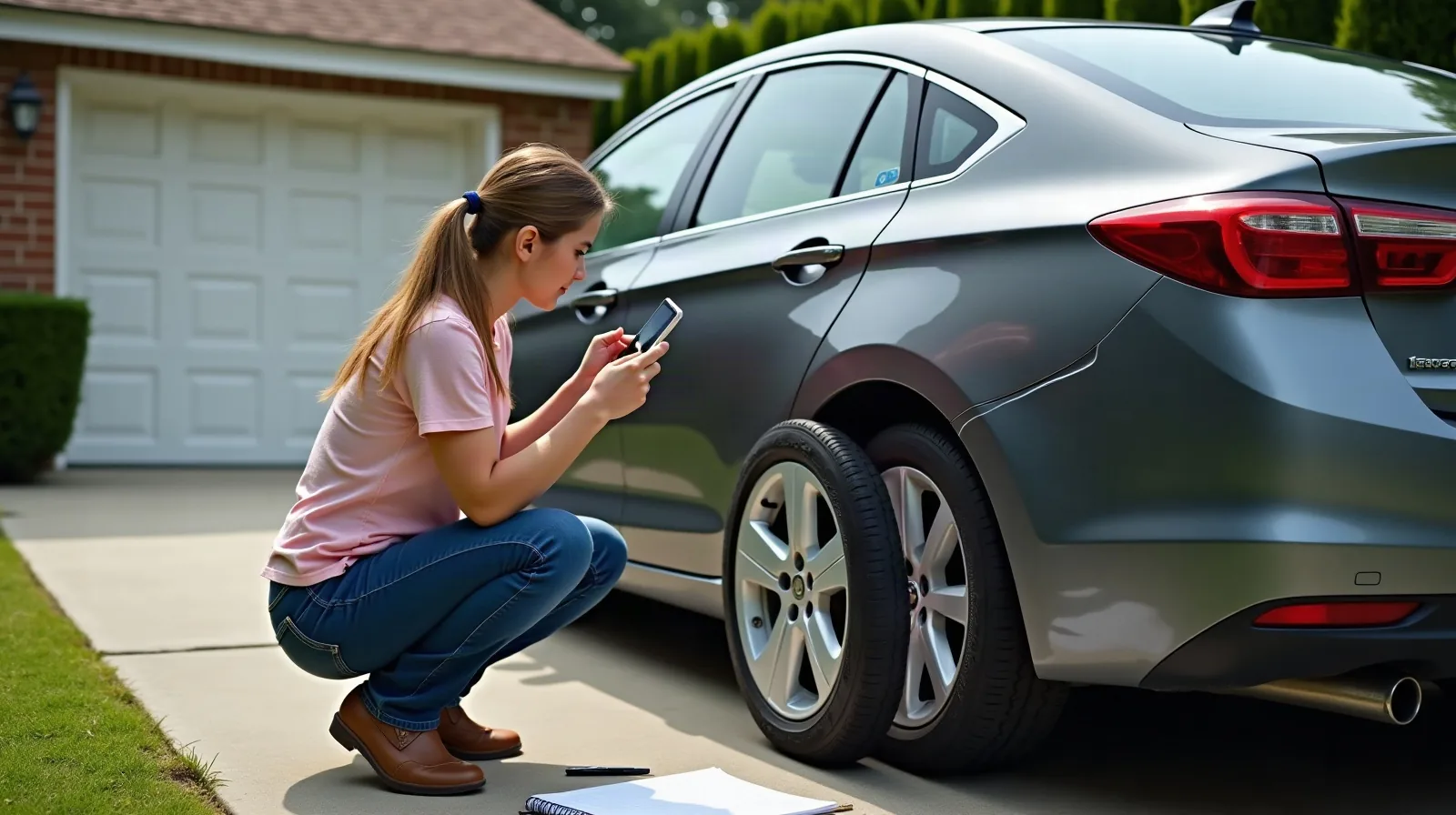
- Proof is on you. Claims usually require showing the other driver was at fault and uninsured or underinsured, which is easier with a police report, photos, and the other driver's details written down at the scene.
- Hit-and-run rules can be strict. Some policies require prompt reporting to the police, and some require physical contact between the vehicles before the claim counts.
None of these are traps so much as details that only matter once a claim is open, which is exactly why they're worth reading before one is.
How to Choose Your Limits
The most common mistake is treating UM/UIM as an afterthought and letting it default to the lowest limit offered. A better starting point is to think about it from the other direction: the coverage exists to protect you against a shortfall, so the useful question is how much protection would keep a serious crash from becoming a financial one.
- Match your own bodily injury limits as a starting point. Many insurers and consumer guides suggest setting UM/UIM to match the liability limits you carry for others; it's a sensible default that keeps your protection in proportion.
- Consider your health coverage. A high-deductible health plan, or none, makes a larger UM/UIM limit more valuable, since the out-of-pocket costs of a serious injury land on you first.
- Consider your dependents and income. If others rely on your paycheck, lost-wage coverage matters more than it does for someone with a cushion.
- Ask what the extra costs. Raising UM/UIM limits is usually among the cheaper upgrades on a policy, because it's priced on the likelihood of meeting an uninsured driver — a number that varies widely by state.
- Read the rejection form before signing it. If you're told you can waive the coverage to save money, ask exactly how much it saves and what you'd be giving up.
How It Fits With the Rest of Your Coverage
UM/UIM overlaps with a few other pieces of a policy, and the boundaries are worth knowing. Medical payments or personal injury protection coverage, where offered, pays for injuries regardless of who's at fault and often pays first, with UM/UIM picking up what's left. Collision coverage repairs your car no matter who's at fault, and it's often the simpler route for vehicle damage when the other driver is uninsured. And an umbrella policy, if you have one, can sometimes extend UM/UIM limits higher — something worth asking about before assuming it does.
The quiet assumption behind every car policy is that the other driver has one too. This coverage is what you're left with when that assumption turns out to be wrong — and it's a lot easier to set up before the crash than to wish for afterward.