A traditional car insurance quote is built almost entirely from things known about a driver before the engine ever turns over — age, location, credit-based insurance score, claims history, the vehicle itself. None of it actually watches anyone drive. Usage-based insurance adds a second layer on top of that same foundation: enroll through an app or a small plug-in device, and the price stops being a fixed guess and starts responding to a stream of real driving data. Here's how the tracking actually works, the two different programs that get lumped under one name, and the honest way to know whether signing up helps.
What Usage-Based Insurance Actually Is
Usage-based insurance, sometimes called telematics insurance, doesn't replace the underwriting factors a traditional policy already runs on — it layers a real-time input on top of them. The starting price is still set the ordinary way, from the same profile-based factors any insurer would use. Enrolling in a usage-based program then opens a window, usually a set number of days or trips, during which the insurer collects driving data and uses it to adjust the price from wherever those baseline factors landed it.
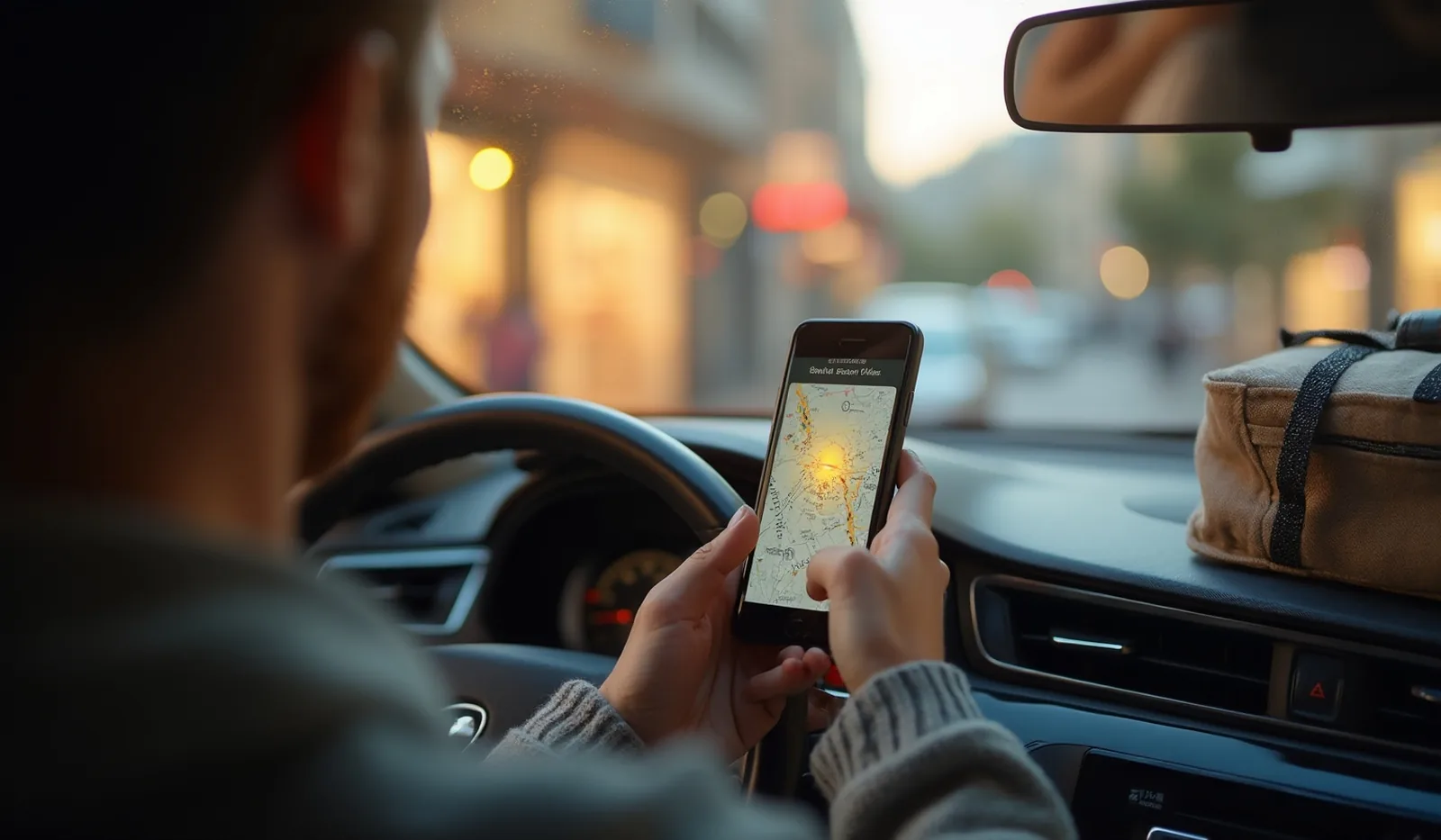
Enrollment is voluntary and typically comes through one of two mechanisms: a smartphone app that runs in the background using the phone's own GPS and motion sensors, or a small physical device that plugs into the vehicle's diagnostic port beneath the dashboard. A few programs use a small dashboard-mounted beacon instead. All three are collecting a similar picture — they just differ in what hardware does the watching.
What the App or Device Actually Tracks
The specific metrics vary by insurer, but most usage-based programs are scoring some combination of the following on every trip:
- Hard braking and rapid acceleration — sudden changes in speed the sensors read as abrupt, whatever caused them.
- Hard cornering — sharp turns taken at a speed the algorithm flags as aggressive.
- Speed relative to posted limits — GPS location cross-referenced against map data to flag driving meaningfully over the limit for that road.
- Phone handling while the vehicle is moving — screen unlocks or touches detected during a trip, used as a stand-in for distraction.
- Time of day — late-night driving windows get weighted as statistically riskier, independent of anything the driver does behind the wheel.
- Total mileage — how much the vehicle is driven overall, tracked separately from how it's driven.
None of these metrics can see intent. A hard brake to avoid a driver who cut in unexpectedly reads identically to a hard brake caused by following too closely. The device is measuring motion, not judgment — which matters for anyone trying to reason about what a low score actually means.
Two Different Bets, Not One
"Usage-based insurance" is really shorthand for two distinct programs that get marketed under the same umbrella, and knowing which one is being offered changes the whole calculation:
- Pay-per-mile (mileage-based) programs price the policy primarily on how much the vehicle is driven, with a base rate plus a per-mile charge. These favor drivers who simply don't put many miles on the odometer — a retiree, someone who works from home, or a rarely driven second car.
- Pay-how-you-drive (behavior-based) programs price the policy on the scored driving metrics above — braking, cornering, speed, phone handling, time of day — largely independent of total mileage. These favor drivers who cover real distance but do it smoothly, during the day, without touching the phone.
Some insurers blend the two into a single hybrid score. Assuming a "usage-based" offer measures the same thing as one a friend was quoted is a common and costly assumption — the two versions reward completely different driving profiles.
How the Discount Math Actually Works
Most programs front-load an enrollment discount that has nothing to do with driving data at all — a percentage off simply for signing up and installing the app or device. That's an incentive to get people through the door, not a reflection of anyone's driving. The number that matters more comes later: once the evaluation window closes, usually after a set number of trips or a set number of days, the insurer recalculates the price based on the scored behavior collected during that window.
That final adjustment can move the price further in the driver's favor, hold it roughly where the enrollment discount left it, or in some programs and some states, move it the other way. Programs vary meaningfully on this point: some are built so the data can only ever lower the price from where it started, treating a poor score as simply forfeiting the extra discount rather than adding a penalty. Others are explicitly two-directional, capable of raising the price at renewal if the scored data comes back worse than the baseline assumed. Which version is on offer is stated in the program's terms, not implied by the marketing, and it's worth confirming before enrolling rather than after a renewal notice arrives.
Who It Actually Helps
The math tends to favor a fairly specific driver: someone who drives fewer miles than the baseline the insurer already assumed, someone whose braking and cornering are naturally smooth rather than sharp, someone who does most of their driving during the day rather than late at night, and someone who leaves the phone alone once the car is moving. For that driver, the data collected during enrollment simply confirms what a flat-rate quote couldn't see, and the price moves down to match.
Where It Can Quietly Cost You More
The same tracking that rewards a favorable profile can work against a driver whose real circumstances don't fit it, even without anything resembling reckless driving:
- A long commute logs more miles and more total trips than a short one, even if every mile of it is driven carefully — a real disadvantage under a mileage-weighted program.
- Work that requires late-night or early-morning driving — a shift job, occasional delivery or rideshare use of a personal vehicle — runs squarely into the time-of-day penalty built into most behavior scores.
- Defensive braking in heavy traffic reads the same to the sensor as aggressive braking, since the device has no way to tell why the brakes were applied.
- One unusual stretch during the evaluation window — a cross-country move, an unfamiliar rental substituted temporarily, a single stressful week — can drag down a score that would otherwise reflect months of ordinary, careful driving, simply because the trial period happened to fall during it.
The Privacy Trade-Off Nobody Reads Closely
Enrolling means handing over a continuous record of where a vehicle goes and how it's driven, and the terms governing that data vary a lot more than the pricing pitch suggests. Worth checking before installing anything: how long the raw location and driving data is retained, whether it's shared with or sold to any party beyond the insurer itself, whether the data from this program can affect other policies or products from the same company, and — critically — whether opting out later reverts the policy cleanly to standard pricing or leaves a lasting mark. A program that's genuinely free to try comes with a genuinely free way to leave it; one that doesn't spell that out plainly is worth a second look before enrolling.
The Honest Framework for Deciding
- Confirm which version is on offer — mileage-based, behavior-based, or a blend — before assuming it will reward the same driving a friend's program did.
- Ask directly whether the score can raise the price or only ever lower it from the starting quote. That single answer changes how much downside there is to trying it.
- Run the math on actual driving patterns first — real monthly mileage, the honest shape of a typical commute, how much of the driving happens after dark — rather than assuming a favorable score is likely.
- Give the evaluation window a normal stretch of driving, not a deliberately cautious one. Overcorrecting during the trial only to relax afterward creates a score that doesn't reflect how the car is actually driven the rest of the year.
- Confirm the opt-out terms before enrolling, not after a bad evaluation period makes leaving suddenly urgent.
The pitch treats the tracker or the app as a straightforward upgrade over guessing — safer drivers pay less, obviously. The honest version is narrower: it's a more precise measurement, and precision only helps the driver whose real habits were already better than the assumptions baked into the flat-rate quote.