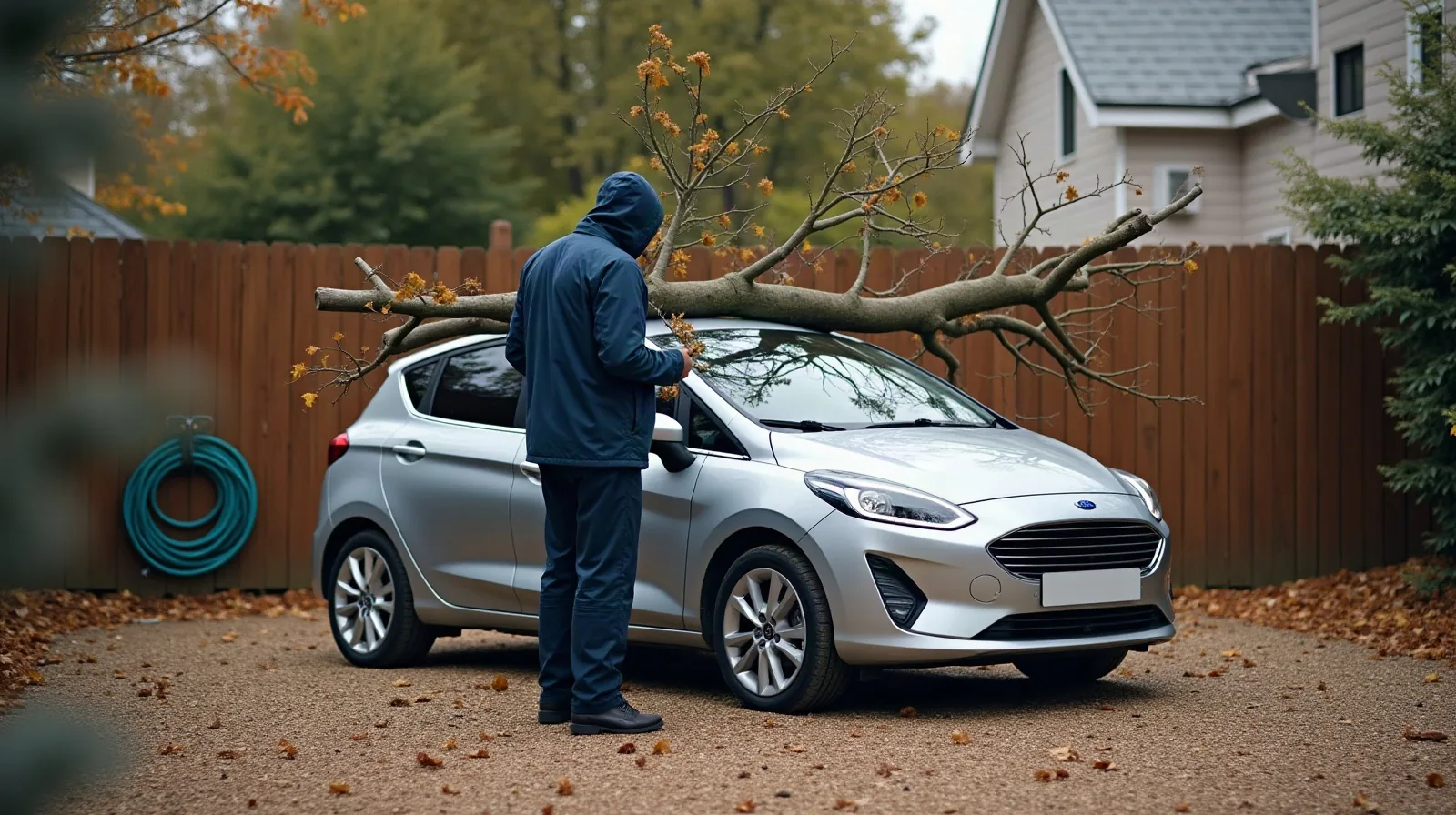
Most car insurance is built from separate pieces, and two of them cause the most confusion: collision and comprehensive. Both pay to fix or replace your own vehicle. Neither is required by law in most places, and the names don't tell you much about which one does what.
Here's how each one works, where the line between them falls, how the deductible fits in, and a simple test for deciding whether either is still worth paying for as a car gets older.
Two Coverages, One Job: Fixing Your Car
Liability coverage pays for damage you cause to other people and their property. Collision and comprehensive are different: they pay for damage to your car, regardless of how your own policy handles the other driver's costs.
- They're optional by law. Most states don't require them. But if a lender or leasing company holds the title, the contract almost always does.
- They're usually sold as a pair. Insurers often call the combination "full coverage," a casual phrase rather than an official policy term. It doesn't mean everything is covered.
- They pay up to the car's value. The ceiling is what the car was worth just before the loss, not what you paid for it or what you owe.
What Collision Covers
Collision pays when your car hits something or something hits it in a crash, no matter who was at fault.
- Crashes with another vehicle. If you cause the accident, collision repairs your car. If the other driver caused it, you can use yours or claim against theirs.
- Single-car accidents. Hitting a pole, a guardrail, a fence, or a wall is a classic collision claim.
- Rollovers and potholes. A rollover counts, and so does damage from a deep pothole in many policies.
The key idea is that collision covers impact events, and it pays even when the mistake was yours. That's the main thing it buys: protection from your own errors.
What Comprehensive Covers
Comprehensive is the catch-all for damage that isn't a crash. A better name would be "everything else," and most of what's on its list is out of your control.
- Theft and vandalism. A stolen car, a smashed window, or a keyed door.
- Weather. Hail, a flood, high wind, or a storm that drops a tree on the roof.
- Fire. From any cause other than a crash.
- Animals. Hitting a deer is typically comprehensive, not collision, which surprises many drivers.
- Falling objects and glass. A branch, debris, or a cracked windshield from a flying rock. Some policies treat glass separately, with their own deductible.
Because it covers so many everyday risks, comprehensive claims are less likely to be blamed on you, and they tend to cost the insurer less to settle than a serious crash.
The Deductible: What You Pay First
Each coverage has its own deductible, the amount you pay before the insurer starts paying. A claim only pays what's left above that figure.
- They can differ. It's common to carry a larger deductible on collision than on comprehensive. Check your declarations page to see both.
- Higher deductible, lower price. Raising it shrinks the premium because you're taking on more of each loss. The trade only works if you could actually cover that amount tomorrow. See how to choose your insurance deductible.
- Small repairs may not clear it. A dent that costs a bit more than your deductible leaves a small payout, which is why it's worth knowing when a small claim is worth filing.
When Collision and Comprehensive Are Worth Keeping
These coverages protect the car itself, so the decision comes down to what the car is worth and what you could absorb.
- You owe money on it. A lender will require both. If the loan balance exceeds the car's value, gap insurance may belong in the picture too.
- The car would be hard to replace. If losing it would force you into a loan or leave you without a way to get to work, protection is worth the cost.
- Your savings are thin. Coverage matters most when a repair bill would otherwise land on a credit card.
- Your area is risky. Heavy hail, frequent theft, or lots of deer make comprehensive more likely to pay off.
When You Can Reasonably Drop Them
As a car ages, its value falls while the premium often doesn't fall as fast. At some point the insurer's maximum payout shrinks until it barely exceeds the deductible.
- A rough test. Add up the yearly cost of the coverage. If it's a large share of the car's value, the math starts to favor self-insuring.
- Check the real value. Look at what similar cars actually sell for in your area, not what you remember paying. Compare that with the keep-or-replace math you might already be doing.
- Keep the cushion. Dropping coverage only works if you set aside what you'd need to replace the car, ideally in your emergency fund.
- Drop one, not both. Some people keep comprehensive, which is usually cheaper, and drop collision first. Others do the reverse. Price each separately.
Liability coverage is a different matter. Keeping it, with limits that fit your situation, protects your finances from the costs of hurting others, and it's worth holding whatever the car's age.
A Five-Minute Coverage Check
- Find both lines. Locate collision and comprehensive on your policy and note each deductible and its yearly cost.
- Estimate the car's value. Check listings for the same model, year, and mileage near you.
- Compare. If one coverage's yearly cost is a big share of that value, price the savings from dropping it.
- Test the deductible. Ask whether you could pay it this week without borrowing.
- Get a quote both ways. Ask for prices with a higher deductible and with coverage removed, then decide with real numbers. It's also a good moment to re-quote your insurance.
Pull up your policy this week and write down the cost of each coverage next to your car's current value. It's one of the few places where a quick calculation can lower a premium without taking on risk you can't afford. For a wider view of how premiums are built, read how car insurance pricing works.