A professional energy audit is a wonderful thing, but you don't need one to find where your house bleeds money. Most of the biggest waste is hiding in plain sight — in the gaps you can feel with the back of your hand and the settings you haven't touched since you moved in. The trick is knowing what to fix first, because the cheapest fixes usually deliver the fastest payback.
So here is a room-by-room walk-through, ranked roughly by payoff versus effort. Start at the top. Everything up front costs little more than a Saturday afternoon, and none of it asks you to sit shivering under a blanket.
First, feel for the leaks
Air moving where it shouldn't is the number-one culprit, and it's almost free to fix. On a windy day, run the back of your hand slowly around the edges of exterior doors and windows. Wherever you feel a draft, air — and the money you paid to heat or cool it — is escaping. Do the same at electrical outlets on exterior walls, around the attic hatch, and where pipes or wires pass through walls.
Then plug what you found:
- Weatherstripping around doors and operable windows seals the gaps you can feel but can't see well.
- Caulk handles the stationary cracks — window frames, baseboards, and any place two materials meet.
- Foam gaskets behind outlet and switch covers on exterior walls close a surprising little draft.
- A door sweep or draft stopper shuts the gap under an exterior door, which is often the worst offender in the whole house.
This is the highest payoff for the lowest effort, full stop. Sealing leaks makes every other system in your home work less hard, and it makes the house more comfortable, not less.
Tune the thermostat you already own
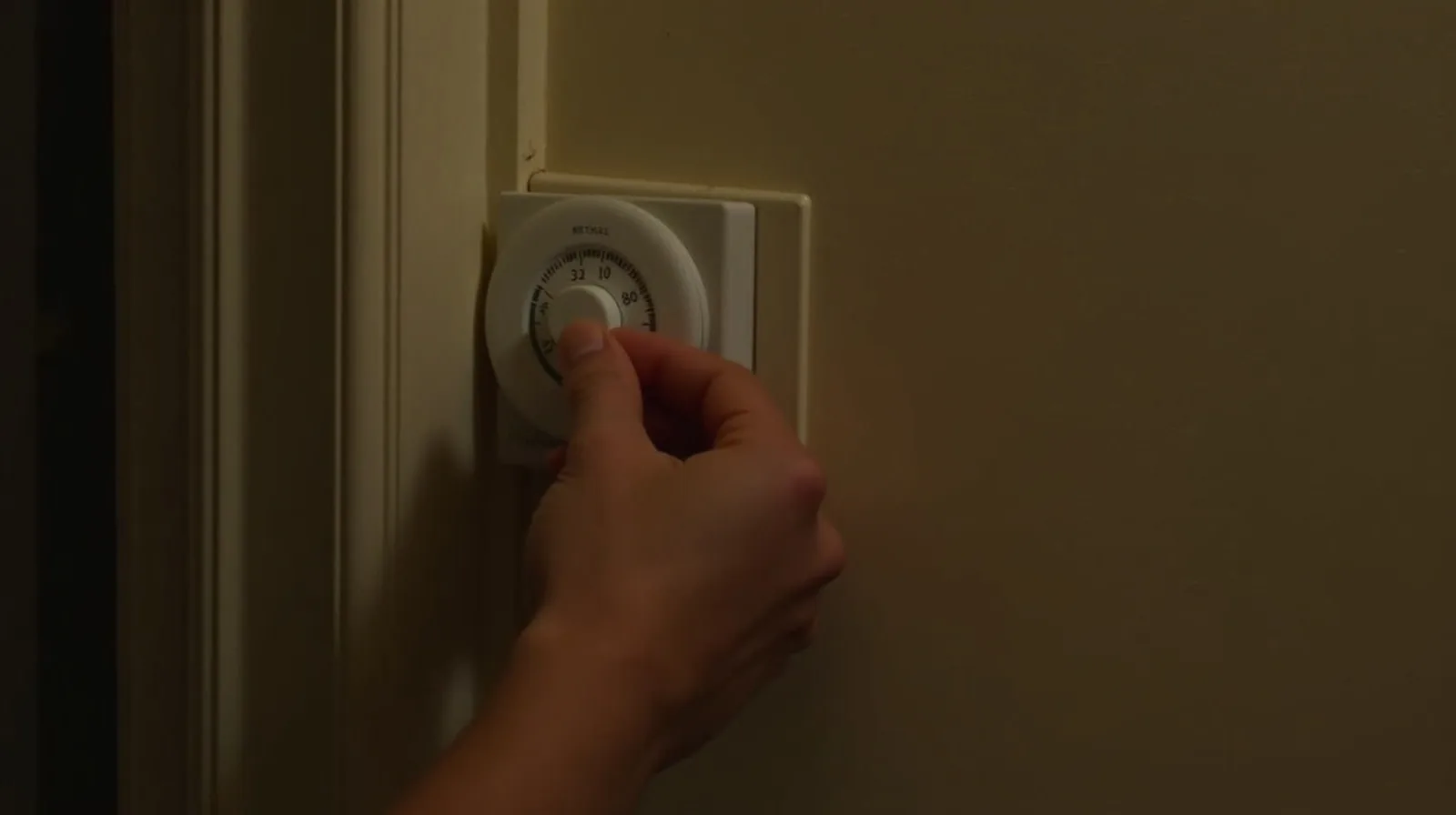
You are almost certainly paying to heat or cool rooms that are empty or occupants who are asleep. A programmable or smart thermostat lets you set the temperature back automatically while you're at work and overnight, then bring it back to comfortable before you notice. The comfort trick is scheduling the recovery to finish before you wake or arrive — you get the savings of the setback without ever feeling the chill.
If you don't have a programmable thermostat, nudging the setting a few degrees toward the outside temperature when you leave, and back when you return, does the same job by hand.
Turn down and wrap the water heater
Heating water is one of the largest slices of a home's energy use, and the default setting is often hotter than anyone needs. Lower the water heater's temperature to a comfortable-but-safe level and you'll never notice the difference at the tap — except on the bill.
While you're down there, feel the tank and the first few feet of pipe. If they're warm to the touch, they're shedding heat into the basement. An insulating blanket on an older tank and foam sleeves on the exposed hot-water pipes keep that heat where it belongs.
Hunt down the vampires
Plenty of devices sip power around the clock even when they're “off” — the standby, or phantom, load of chargers, media gear, and anything with a clock or a remote. Individually it's trivial. Added up across a house, it runs quietly all year.
Group the worst offenders — the entertainment center, the home-office cluster — onto power strips you can switch off with one flick when you're done for the night or heading out of town. It's the rare energy fix you can do in an afternoon and forget forever.
Swap the bulbs still burning old tech
If any older incandescent bulbs are still hanging on, replacing them with LED equivalents is one of the easiest upgrades in the house. LEDs use a fraction of the energy for the same light and last far longer, so you're also buying fewer replacements. Start with the fixtures you leave on the longest — the kitchen, the porch, the room where everyone gathers.
Fix the way you do laundry
Most of the energy a washer uses goes to heating water, so washing in cold whenever you can quietly trims the bill, and modern detergents are built for it. A few more free habits help:
- Run full loads. The machine uses similar energy whether it's half full or packed, so fewer, fuller loads win.
- Clean the dryer's lint filter every time. A clogged filter makes the dryer run longer to do the same work.
- Line-dry when it's easy. Even drying half your loads on a rack spares the most energy-hungry appliance in the room.
Keep the air moving efficiently
Your heating and cooling system is the biggest energy user in most homes, and a clogged filter makes it strain against its own dust. Check the filter regularly and change it when it looks gray; a clean filter lets the system move air freely and run less.
Ceiling fans help too, if you use them right. Running them so they push air downward in warm months creates a breeze that lets you ease off the cooling. Reversing them to pull air upward in cold months nudges the warm air pooled near the ceiling back down into the room. A fan cools people, not rooms — so turn it off when you leave.
The bigger lifts, for later
Once you've done the quick wins, the remaining opportunities are the ones that cost real money and pay back over years, not weeks. Adding insulation in an under-insulated attic can make a meaningful, lasting difference, and upgrading old single-pane windows improves comfort as much as efficiency. Both are worth doing — just go in knowing they're long-payback investments, not weekend fixes. Do the cheap, high-payoff work first, and you may find the bill drops enough that the big projects can wait until you're ready.