Meal planning has an image problem. Say the words and most people picture a color-coded grid, a stack of unfamiliar recipes, and a Sunday that vanishes into chopping. That version works beautifully — for about four days. Then a late meeting, a tired kid, or plain lack of interest knocks it over, and you're standing in the kitchen at 6 p.m. with nothing decided and a phone full of delivery apps.
The problem is rarely the food. It's that the plan was built for an idealized, well-rested version of you who doesn't exist on a Wednesday. What actually survives real life is smaller, looser, and more forgiving.
The real enemy is 6 p.m., not laziness
The reason takeout wins isn't that you're lazy or bad with money. It's that by early evening you've made a few hundred decisions already, and your brain is done. What to eat, whether you have the ingredients, whether you have the energy to cook — that's three hard questions stacked on the exact moment you're least equipped to answer them. Ordering out isn't a preference; it's an escape hatch from deciding anything at all.
So the point of a plan isn't discipline. It's moving the decision to a calmer time — a quiet ten minutes earlier in the week — so that 6 p.m. you only has to execute, not choose.
Build a short rotation, not a cookbook
You don't need thirty recipes. You need about seven — the meals you already make without looking anything up, the ones your hands know. That short rotation of reliable, boring-in-a-good-way dinners is the backbone of the whole system.
Keeping it short does a few quiet favors:
- You get faster every time, because repetition beats novelty.
- You shop the same core ingredients weekly, so nothing exotic rots in the drawer.
- You remove the research tax — no scrolling, no half-finished recipe with a missing ingredient.
Novelty belongs on the weekend, when you have the energy for it. Weeknights run on autopilot, and autopilot needs a runway it already knows.
Give the week a loose shape with theme nights
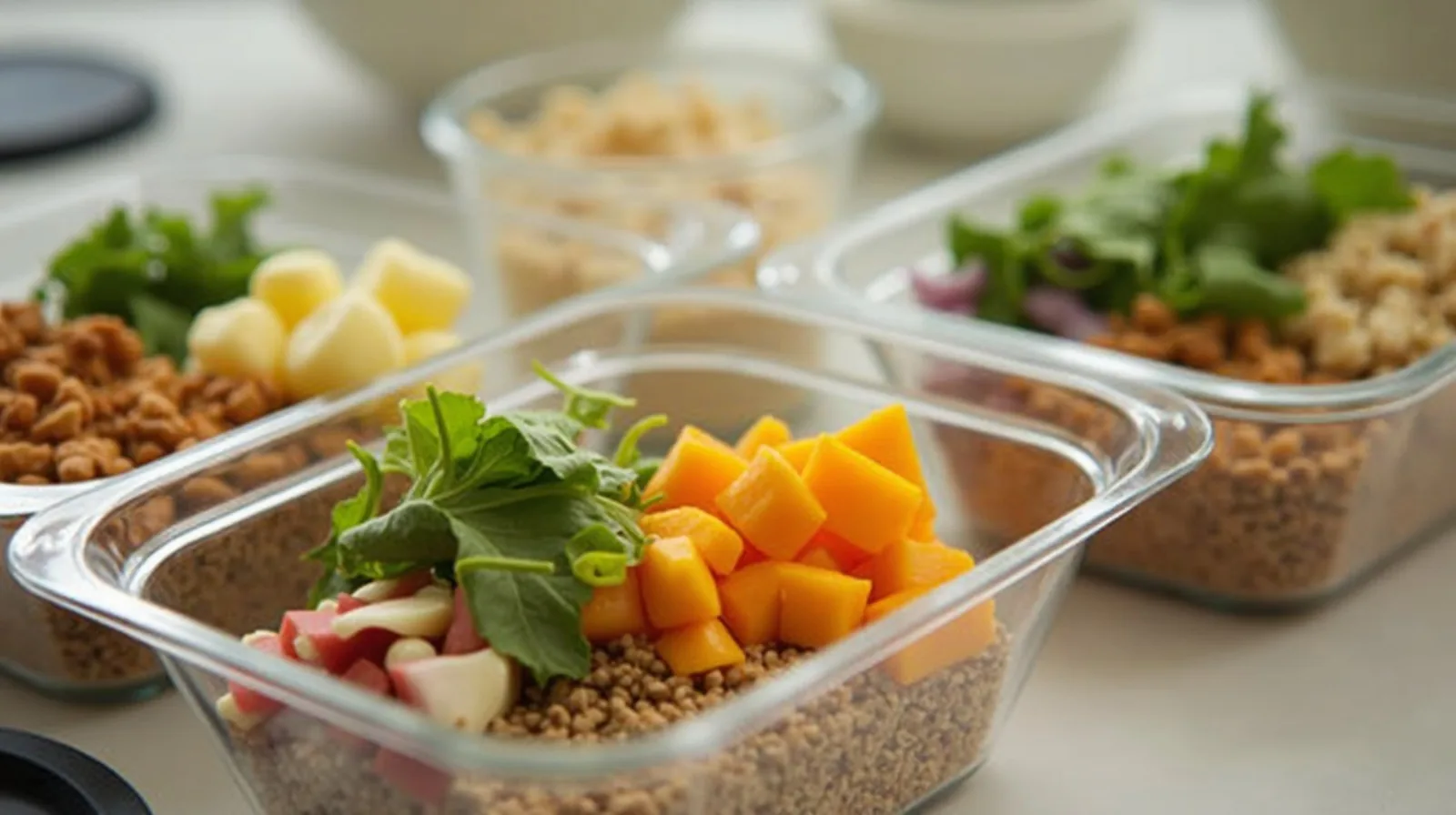
Theme nights sound cute, but they're really just a way to shrink the decision. If one night is always a grain bowl, another always pasta, another always tacos-of-some-kind, you've turned an open-ended question into a fill-in-the-blank. You're no longer asking “what should I make?” but “what goes in the bowl tonight?” — a much smaller, friendlier question. The theme stays fixed; the details flex with whatever you have. Structure on the outside, freedom on the inside.
Plan around the fridge and the sale flyer
A plan built in a vacuum fights your kitchen; a plan built around what's already there works with it. Before you decide anything, scan the fridge, freezer, and pantry for what needs using up, then glance at what's marked down that week. Now you're not planning in the abstract — you're planning around ingredients you already own or can get cheaply.
Your rotation tells you the shape of the week; the fridge and the markdowns fill in the specifics. The half-bag of greens becomes tonight's bowl instead of next week's compost.
Cook once, coast twice
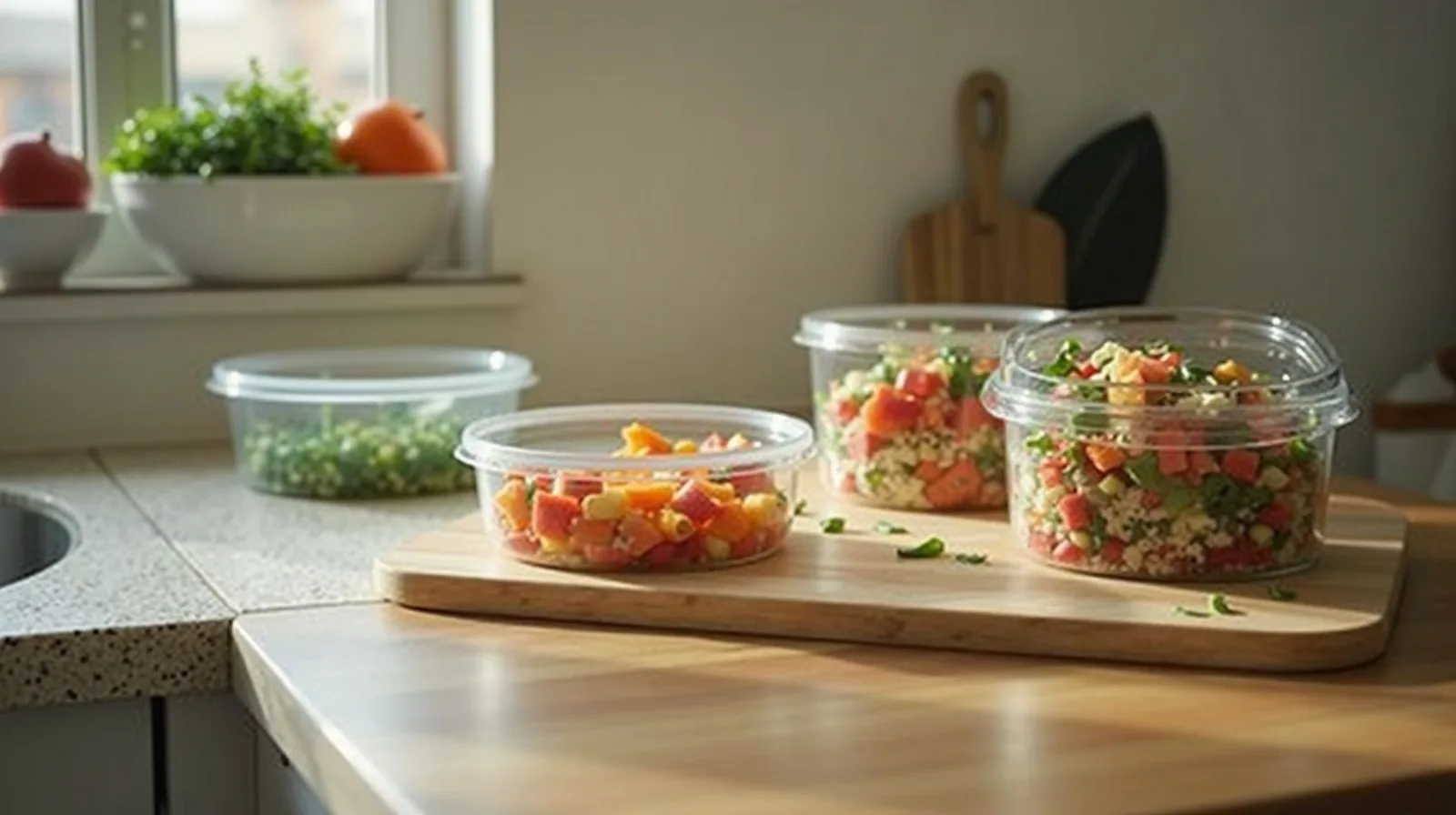
The highest-leverage habit is anchor cooking: once or twice a week, make a big batch of something flexible — a pot of grains, a tray of roasted vegetables, a large portion of protein — and let it become the base of two or three meals. The same roasted vegetables are a side one night, a bowl the next, a filling the night after.
You're not committing to eating the identical plate three times. You're doing the annoying part — the chopping, the heating, the cleanup — once, then coasting on it. Future you, standing in the kitchen at 6 p.m., inherits a head start instead of a blank slate.
Keep three emergency meals in the pantry
Here's the part most plans skip, and the part that actually saves you money: the backstop. There will be nights when nothing got prepped and you're one tap from ordering out. The goal isn't to never have those nights — it's to make sure they don't require takeout.
So keep a few genuinely fast, shelf-stable meals you can assemble with zero planning — pasta with canned tomatoes, rice and canned beans, eggs on toast. Nothing impressive; just enough to answer “there's nothing to eat” with “yes there is.” When the emergency meal is easier to reach than your phone, the delivery habit quietly loses.
Do the takeout math
The sticker on the menu is only part of what ordering out costs. With delivery you're paying a premium for the packaging, the service, the fees, the tip, and the convenience, all bundled into one cheerful tap. That same meal carries a markup precisely because it's designed to rescue you at your weakest moment.
Do it once and it's a treat. Do it three or four times a week — exactly what decision fatigue encourages — and that premium becomes one of the largest, least-noticed line items in your month. The savings from cooking aren't about being frugal. They're about not paying the convenience tax on autopilot.
A framework, not a schedule
Notice what this isn't: a rigid grid that assigns Tuesday a specific dish and punishes you for swapping it. It's a loose framework — a short rotation, a few theme nights, cooking around what's on hand, one batch made ahead, and a pantry that can bail you out. Nothing here breaks if a night goes sideways, because it's built to bend.
That's why it survives real life. A perfect plan you abandon by Tuesday saves you nothing. A loose one you actually keep — one that meets you at 6 p.m. with the decision already made — quietly ends the takeout reflex and keeps more money where it started.